
I read this book five years ago, long before I stepped into the world of Psychiatry. I remember closing the book feeling deeply moved and overwhelmed. It made me teary-eyed in some places and laugh out loud in others. Back then, I thought it was simply a beautiful, heart-warming story about a grumpy old man whose heart slowly softens. I did not realise that beneath its gentle humour lay a remarkably layered exploration of the human mind. Today, as a Psychiatry resident, I see the novel differently.
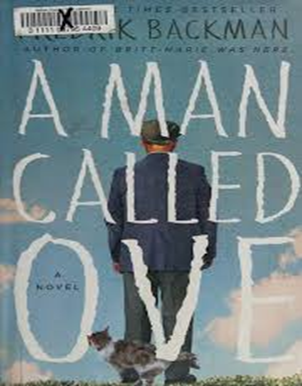
My fondness for books took root early, and stories have always been my way of understanding people. Reading this book again now feels like revisiting an old friend and suddenly noticing how much wisdom it was offering all along.
Ove’s defining traits—rigidity, irritability, and moral absolutism—are easily mistaken for personality flaws. They reflect a man shaped by early losses, emotional deprivation, and a lifelong dependence on order as a coping mechanism.
When his wife Sonja dies, that fragile structure collapses. His life loses colour, purpose, and meaning. Ove never explicitly articulates sadness. Instead, his depression speaks through cynicism, social withdrawal, and anger. His repeated, methodical suicide attempts reflect not impulsivity but existential exhaustion. The novel, thus, highlights how depression doesn’t always look like tears and often hides behind socially acceptable masks, delaying recognition and care.
The brilliance of the book is how healing arrives—not through dramatic speeches, but through people. Parvaneh barges into Ove’s life with chaos, warmth, and persistence. The neighbourhood pulls him back into usefulness. Slowly, almost stubbornly, life reclaims him. It reminds us that connection is deeply therapeutic.
The novel also showcases a spectrum of issues we see every day in our communities: a gay man rejected by his family but embraced by a seemingly orthodox Ove; an elderly man with dementia and the quiet suffering of his wife; how learning about the man’s dementia suddenly makes Ove let go of old grudges, because illness reframes everything.
The book quietly portrays grief, depression, and the therapeutic power of everyday relationships, reminding us that Psychiatry begins not in clinics, but in homes, neighbourhoods and unspoken pain. Behind “difficult” behaviour lies unacknowledged grief, and behind recovery, not just treatment, but human connection. For psychiatrists, it’s a reminder to listen beyond irritability and recognise suffering where it is least expected.
I hope you enjoy this book as much as I did and read it not just with affection, but with curiosity, and that it leaves you seeing people a little more kindly.
Dr. Mehak Mittal
Junior Resident
Department of Psychiatry
LLRM Medical College, Meerut

Well written!
Loved the way you looked at this book—such a thoughtful and refreshing perspective. It made me see the story in a whole new way. It felt very human and relatable. Amazing Article.